Guide overview
A source-linked map of Syria’s 2026 property announcements—from Emaar’s Eighth Gate and Arada’s New Damascus to Eagle Hills and Saudi-backed projects—plus the lifestyle case and the due diligence that still matters.
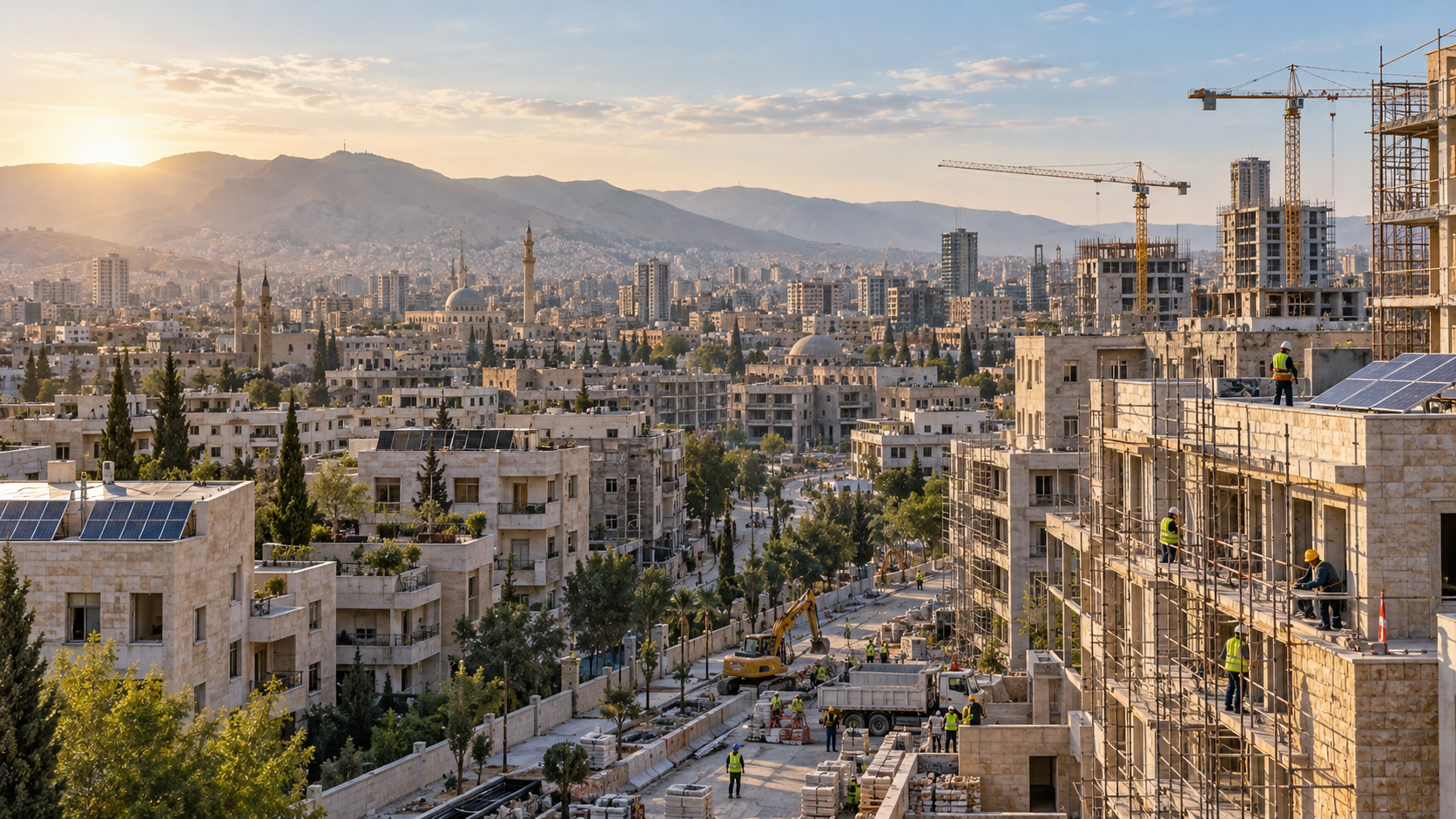
Syria’s 2026 real-estate story is large enough to attract global attention, but ‘boom’ should describe a pipeline rather than completed inventory. The World Bank estimates direct physical damage at about USD 108 billion and reconstruction costs at about USD 216 billion, within a wide USD 140–345 billion range. That gap creates demand for housing, infrastructure, hospitality and urban services, while also showing why financing, utilities, land administration and delivery capacity are as important as headline project values.
Emaar Properties said on 18 May 2026 that it was exiting the joint-venture structure for The Eighth Gate and intended to operate in Syria without a partner. The Yafour project was originally conceived in 2005 as a USD 500 million mixed-use development across roughly 300,000 square metres. The announcement is significant, but buyers should still distinguish corporate intent from current permits, construction milestones, released units and legally available stock.
Arada entered Syria through a joint venture with the Syrian Sovereign Fund for New Damascus, a proposed USD 7 billion integrated city on four million square metres west of Damascus. The published plan includes homes, hospitality, retail, education, healthcare, offices and parks. Arada’s Syria site describes 11,000 homes and currently invites registrations of interest, which is not the same as a binding reservation, final sales release or completion guarantee.
Eagle Hills signed a framework agreement on 5 October 2026 covering residential and tourism communities, beginning with Damascus Heights and Latakia Yachts & Marina. Emaar and Eagle Hills are separate developers, even though Mohamed Alabbar founded both. A framework agreement is an important project stage, but it should not be presented as proof that every parcel is registered, financed, permitted or ready for sale.
Saudi participation adds another layer. Saudi-based Abyat Investment and Real Estate Development Company announced Abyat Hills near Damascus with Syria’s General Housing Establishment, describing more than 2,000 homes and an expected four-year programme. Wider Saudi-Syrian agreements also cover infrastructure, aviation, communications and urban development. Those supporting systems can strengthen a property market, but each real-estate project still needs its own title, planning, procurement and finance review.
The lifestyle case extends beyond construction. Damascus and Aleppo bring historic urban fabric and a food culture built around mezze, kibbeh, grilled dishes and regional pastries; the coast adds Mediterranean beaches, marina potential and forested mountain destinations such as Kassab. These features can support residential, tourism and hospitality demand, but they do not replace due diligence. Before committing capital, verify the project vehicle, land and title, permits, infrastructure, committed finance, payment route, sanctions exposure, dispute forum, construction programme and exit options.
- Emaar is restructuring The Eighth Gate in Yafour
- Arada announced a USD 7bn New Damascus partnership
- Eagle Hills signed a Damascus-and-Latakia framework agreement